Director General Dr. Arthur Bob Karnuah Leads CARI Researchers on Tour of Liberia’s First Cocoa Seed Garden in Beeplay
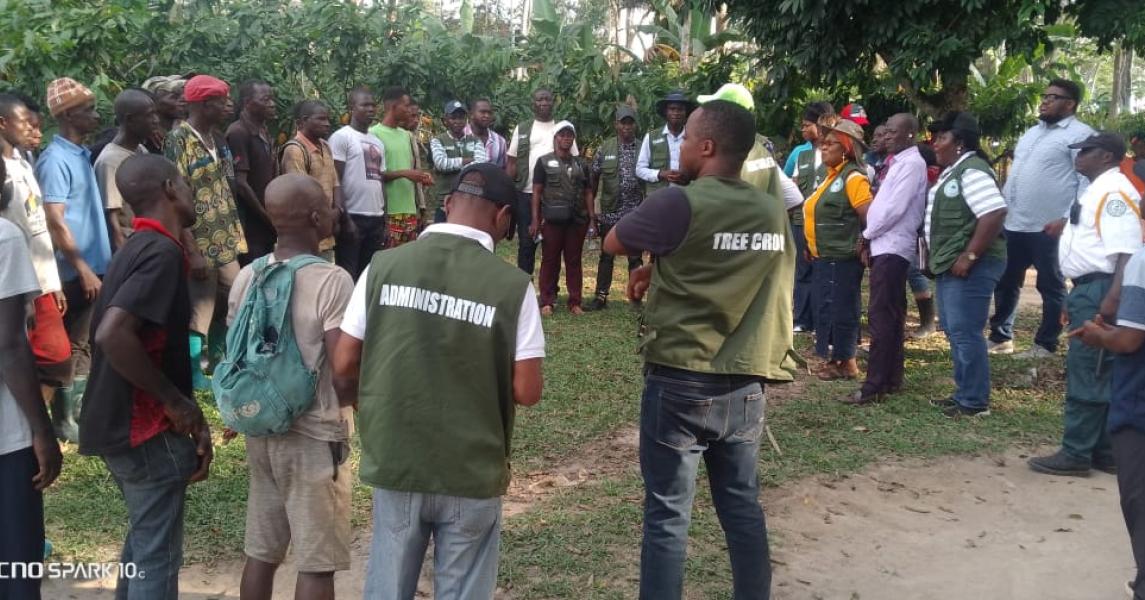
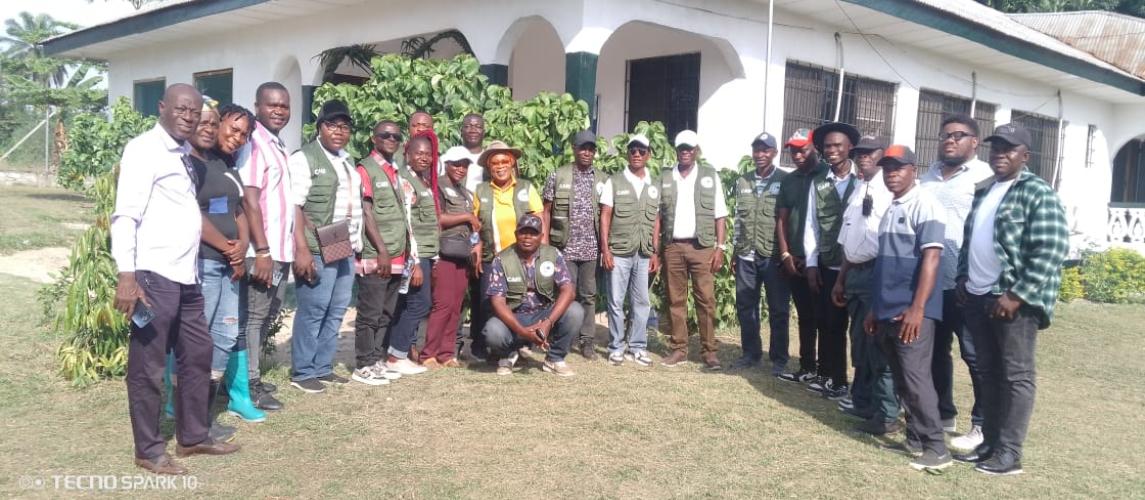
BEEPLAY, Nimba County – As part of activities leading to the 2025 National Agriculture Fair (NAF), scheduled for December 14, 2025, in Ganta, Nimba County, the Director General of the Central Agricultural Research Institute (CARI), Dr. Arthur Bob Karnuah, on December 12, led a team of researchers and management staff on a working visit to Liberia’s first National Cocoa Seed Garden (NCSG) in Beeplay, Buuyao District, Nimba County.
The Government of Liberia, in partnership with the International Fund for Agricultural Development (IFAD), signed a Memorandum of Understanding (MoU) on September 30, 2019, to establish the NCSG. Covering 30 hectares, with 19 hectares already cultivated, the initiative is designed to improve access to high-quality planting materials, strengthen cocoa production, and increase farmers’ yields.
Implemented by CARI under the Tree Crops Extension Project (TCEP), the seed garden’s primary objectives are to supply farmers with certified, high-yield cocoa varieties, promote sustainable farming techniques, and drive innovation across Liberia’s cocoa industry. The project builds on clonal and germplasm materials introduced between 2008 and 2017 by the International Institute for Tropical Agriculture (IITA), Reading University, and the Cocoa Research Institute of Ghana, preserved at CARI’s budwood garden. To ensure genetic integrity, advanced SNP/DNA analysis techniques are employed at the site.
A team of experts, including international consultants specializing in cocoa seed garden development and CARI research officers, supports the project. In 2019, CARI’s Natural Resource Program conducted a soil analysis at the Beeplay site to guide planting decisions.
In his welcome remarks, Charles King, head of project, highlighted the importance of climate-smart cocoa seedlings. “This approach enhances sustainability, ensuring farmers can maintain stable production despite climate variability,” King stated.
The seed garden offers significant benefits, including the production and distribution of high-yielding seedlings, improved crop resilience, and enhanced market competitiveness. Looking ahead, King outlined key activities for 2025–2027: completing garden planting and expansion, conducting regional hybrid testing at national and sub-station levels, collecting data, training agricultural officers in agroforestry and cocoa cultivation, and strengthening public-private partnerships for seed distribution and supply.
By 2027, King projected, the seed garden will produce enough seeds to plant between 3,500 and 5,000 cocoa landscapes annually, provided operational conditions remain stable. Plans also include additional boreholes, infrastructure development, and intensified agroforestry practices to mitigate climate change impacts.
King further explained that four female pod-bearing clones with strong genetic diversity, high yield potential, and moderate disease resistance have been planted across 15 hectares, while ten male clone varieties occupy three hectares to enhance breeding efficiency.
Responding to the progress, Dr. Karnuah praised King and his team for their dedication. He emphasized CARI’s central role in establishing Liberia’s first National Cocoa Seed Garden, noting that the institute has provided scientific expertise, developed disease-resistant cocoa varieties, and ensured farmers’ access to certified high-yield seeds. “Our work has transformed cocoa farming from low-quality, uncertified production into a sustainable, competitive sector,” Dr. Karnuah said.
He further underscored that CARI researchers spearheaded the design and implementation of the seed garden to meet international standards for seed certification and sustainability. Going forward, CARI will assign additional scientists to train local farmers in modern cocoa cultivation, pest management, and seed handling, while conducting ongoing studies to preserve
The Director General, pledging to assign additional scientists to the research facility, encouraged the workforce to remain steadfast in their commitment to innovation, sustainability, and excellence in agricultural research. He urged staff to intensify their support for farmers through knowledge transfer, the adoption of modern cultivation techniques, and the distribution of certified seeds, efforts he described as essential to strengthening Liberia’s cocoa industry and securing its future competitiveness.
Dr. Karnuah emphasized that their collective efforts are vital to ensuring Liberia’s cocoa industry becomes more competitive globally, while also safeguarding traditional quality and strengthening rural livelihoods.
The NCSG remains a cornerstone for Liberia’s cocoa industry, providing farmers with reliable, high-quality seeds, reducing vulnerability to pests and crop failure, strengthening collaboration with government, CARI, and local communities, and safeguarding the country’s reputation for traditional cocoa excellence.