RESADE-CARI Project Empowers Farmers and Grand Bassa University Students with Climate-Smart Soil Management and Irrigation Technologies At The Best Practice Hub
BUCHANAN, Grand Bassa County — The Improving Agricultural Resilience to Salinity through Development and Promotion of Pro-poor Technologies (RESADE) Project, in collaboration with the Central Agricultural Research Institute (CARI), has launched a Farmer Field School (FFS) at the Best Practice Hub in Buchanan. Through hands-on training sessions on soil amendment and climate-smart practices, the initiative is equipping farmers and students with innovative tools to strengthen resilience, boost productivity, and advance sustainable agriculture in Liberia.
Situated at the campus of the Grand Bassa University (GBU), the Best Practice Hub (BPH) is a center of agricultural innovation for students and farmers. In June 2025, a Memorandum of Understanding (MOU) was reached between CARI and GBU. Dr. Arthur Bob Karnuah signed on behalf of CARI, while Dr. Arnold Hill, Head of GBU’s Management Team, signed on behalf of the university. Dr. Hill welcomed the partnership at the time, noting its long-term impact on agricultural education and innovation in Grand Bassa County.
The Project is a four-year initiative funded by the International Fund for Agricultural Development (IFAD) and the Arab Bank for Economic Development in Africa (BADEA). Implemented by the International Center for Biosaline Agriculture (ICBA) in close partnership with IFAD and BADEA, the project addresses the growing challenge of soil salinization across seven Sub-Saharan African countries, including Liberia.
In Liberia, CARI leads implementation, supporting national agricultural development strategies by rehabilitating salinity-affected lands and introducing innovative management practices tailored to smallholder farmers. Drawing on ICBA’s expertise in biosaline agriculture, RESADE promotes salt-tolerant crops, strengthens value chains, and builds capacity among farmers, extension workers, and research institutions.
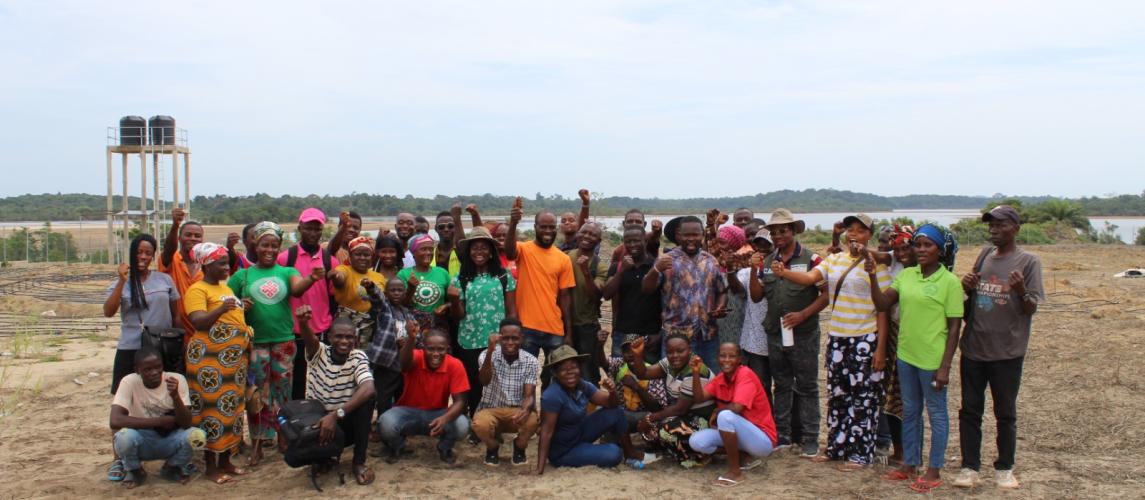
From April 1–3, 2026, the project team led by Dr. James S. Dolo, National Project Coordinator, conducted a three-day practical training session in Bong and Grand Bassa Counties. The training engaged 150 farmers and students from Grand Bassa University in modules on soil management, Farmers Field School (FFS) methodologies, and farmer cluster establishment for six cooperatives in Grand Bassa County.
Dr. Dolo emphasized the importance of embracing innovation and ownership of new technologies, noting that practices such as soil amendments, integrated management techniques, and drip irrigation are designed to improve productivity while strengthening resilience and sustainability. He reaffirmed RESADE’s commitment to farmer-centered innovation and building strong networks that advance food security and rural development.
Extension Specialist Mercy K. Lah highlighted the role of farmer clusters at the Best Practice Hub in Grand Bassa County, describing them as collaborative platforms that unite cooperatives, foster peer-to-peer learning, and strengthen leadership and accountability. She encouraged students to view the Hub as a “living classroom” where academic knowledge meets real-world agricultural challenges.
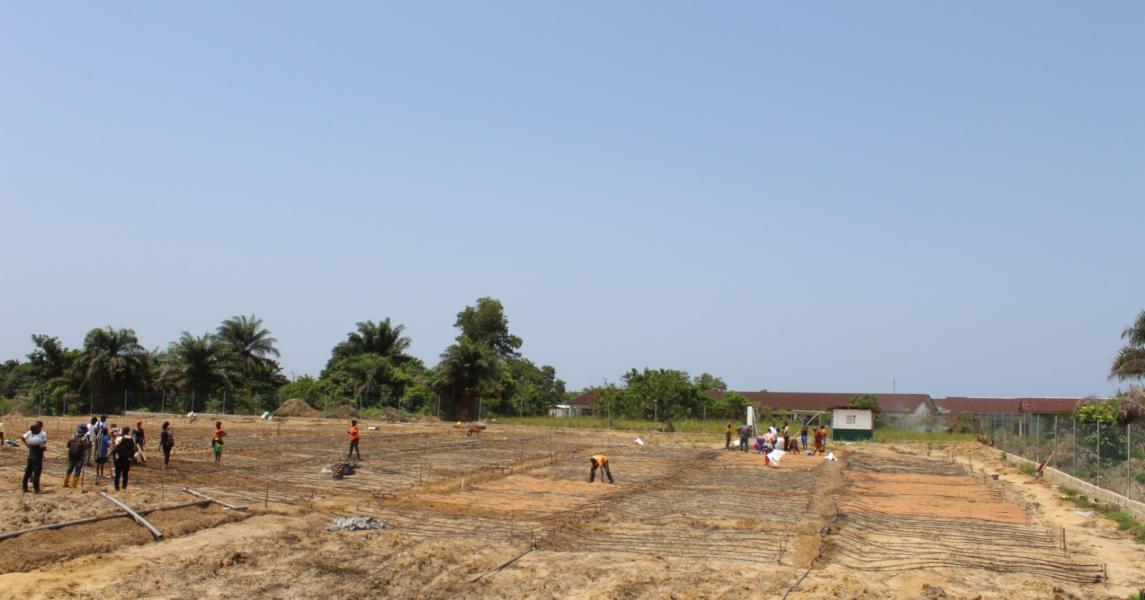
Soil Specialist Prince David Hiama led sessions on soil health, demonstrating lime amendment, biochar incorporation, poultry manure composting, and mulching. These practices improve soil fertility, water retention, and resilience against climate shocks. Farmers and students actively participated in field demonstrations, applying lime and biochar, composting poultry manure, and practicing mulching techniques to conserve moisture and suppress weeds.
During the three-day practical sessions, students and cooperative farmers separately sowed pigeon pea, pearl millet, and sorghum seeds across several drip‑irrigation plots, including those within the farmer cluster they had established.
Together, these interventions form a holistic soil management toolkit that equips farmers and students with practical, evidence-based approaches to sustainable agriculture. By integrating traditional knowledge with modern soil science, the Best Practice Hub is positioning itself as a model for climate-smart agriculture in Liberia. Ultimately, the RESADE-CARI Project underscores a broader vision: empowering farmers, strengthening institutions, and advancing agricultural innovation to secure national food security and rural development.