CARI Strengthens Agriculture by Empowering 2,200 Households, Training Over 1,500 Farmers, and Driving Innovation Across Liberia
SUAKOKO, Bong County – Agriculture remains the backbone of Liberia’s economy, employing the majority of its population and serving as a critical driver of food security, rural livelihoods, and national development. Despite persistent challenges such as low productivity, limited access to improved inputs, inadequate training, and weak value chains, the Central Agricultural Research Institute (CARI) has emerged as a leading force in advancing agricultural innovation and farmer empowerment across the country.
In 2025, with support from international partners, CARI intensified its efforts to strengthen Liberia’s agricultural sector through large-scale distribution of improved crop varieties and targeted capacity-building programs. These interventions were designed not only to boost yields and resilience but also to equip farmers and students with modern farming techniques that enhance sustainability and economic opportunity. By reaching thousands of beneficiaries nationwide, CARI reaffirmed its role as a catalyst for agricultural transformation and a champion of farmer-centered development.
Dr. Arthur Bob Karnuah, Director General of CARI, remarked, “With ongoing research into new crop varieties, CARI remains committed to innovation and farmer support. The varieties already in circulation are proof of what can be achieved when science and agriculture work hand in hand for national development.”
According to the institute’s 2025 report, major achievements in seed and crop distribution were significant. A total of 4,480 bundles of industrial cassava were distributed to 2,243 farmers nationwide, including resilient and high-yield varieties such as Game Changer, No Hunger, Baba 70, Dixon, TMS-95/0289, TMS-92/0057, and TME-693. Other seed distribution activities included 15 kilograms of improved cowpea variety provided to 150 farmers in Bong and Grand Bassa Counties, 15 kilograms of assorted vegetable seeds such as okra, pepper, bitter ball, and cucumber distributed to 16 farmers, and 19.27 metric tons of improved rice seeds (Nerica L-19) supplied to 66 farmers across nine counties. Additionally, 285,000 seedlings of Coffee Liberica were distributed to 245 farmers in Bong County, while three metric tons of soybeans reached 500 farmers in Bong, Nimba, Lofa, Montserrado, and Margibi Counties. Six metric tons of solid bio-fertilizer were also distributed to 20 farmers.
The report highlighted aquaculture development as another area of progress. A total of 36,000 fries and fingerlings, along with 16.5 metric tons of farm-made fish feed, were provided to 105 farmers in Bong and Lofa Counties. An additional 22,000 fries and fingerlings, accompanied by 3.5 metric tons of fish feed, were distributed to 35 farmers in the same counties.
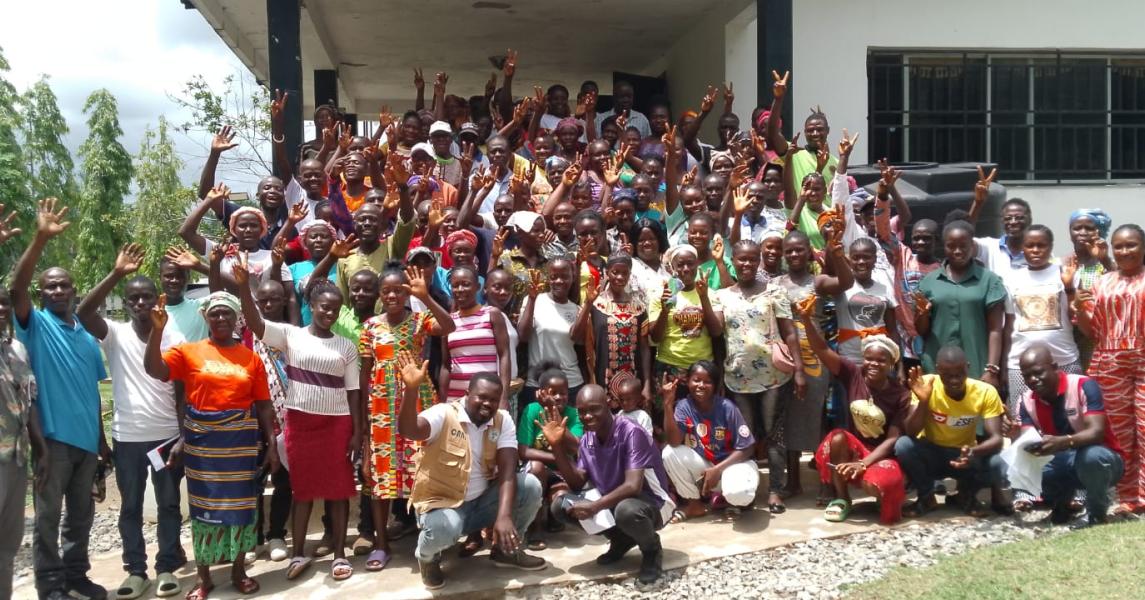
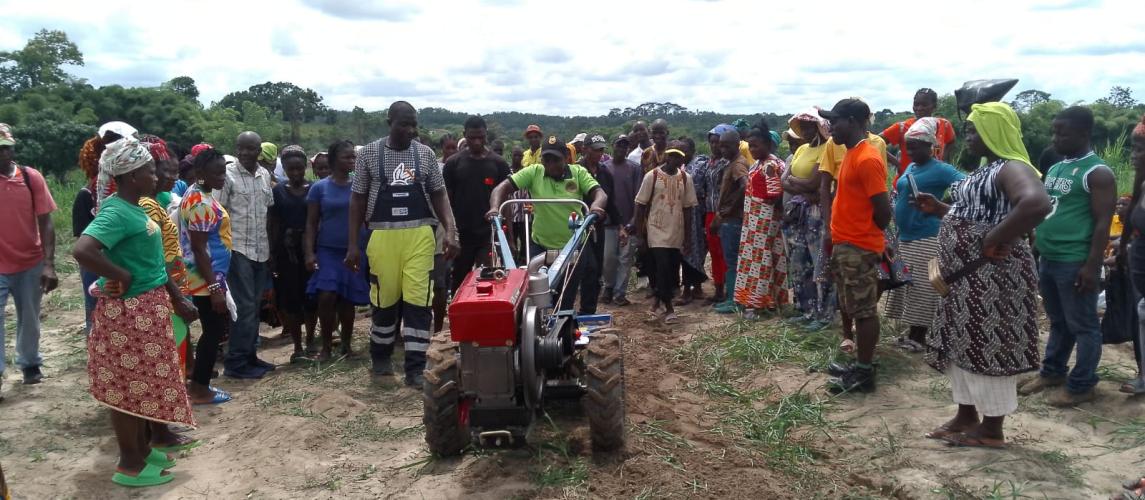
Capacity-building remained a central focus of CARI’s work. The institute emphasized farmer training and technical development, reaching 1,532 farmers and agriculture students with modern farming techniques and value-addition skills. Over 180 farmers and casual workers were trained in certified seed production under the SADFONS/CARI Project, while 125 farmers received training in biochar production, fertilizer application, and weed management under the RESADE/CARI Project. Among the farmers reached, 110 were trained in land preparation, machinery use, and repair. In addition, 500 farmers were trained in soybean value addition, and another 500 in seed quality management under the Seeds4Liberia Project. Thirty-five agriculture students were trained in food processing and post-harvest management, while 31 researchers and selected farmers received training in mutation breeding and speed technology in rice production under the International Atomic Energy Agency (IAEA) arrangement.
The Seeds4Liberia Project’s soybean value chain also introduced six soybean breeder seeds to Liberia. TGx 1835-10E was noted for its early maturity, high oil content, high yield, and shattering tolerance. TGx 1951-3F offered medium maturity, yields of 2.5 to 3 tons per hectare, low shattering, and disease resistance. TGx 1904-6F combined medium maturity with high yield, rust resistance, and good pod clearance. TGx 2029-27F demonstrated medium maturity, yields of up to 2.5 tons per hectare, lodging tolerance, and insect resistance. TGx 2029-53F also had medium maturity, lodging tolerance, and yields of up to 2.5 tons per hectare. TGx 2020-4E was distinguished by early maturity, yields of up to 3.2 tons per hectare, and high protein and oil content.
Through these integrated interventions, CARI not only enhanced access to improved seeds, inputs, and aquaculture resources but also strengthened farmers’ technical capacity. These efforts are ensuring sustainable agricultural growth, resilience, and improved livelihoods across Liberia.