From Climate Data to Farmer Decisions: Strengthening Liberia’s Agriculture Through Crop Modelling and Agro-Met Bulletins
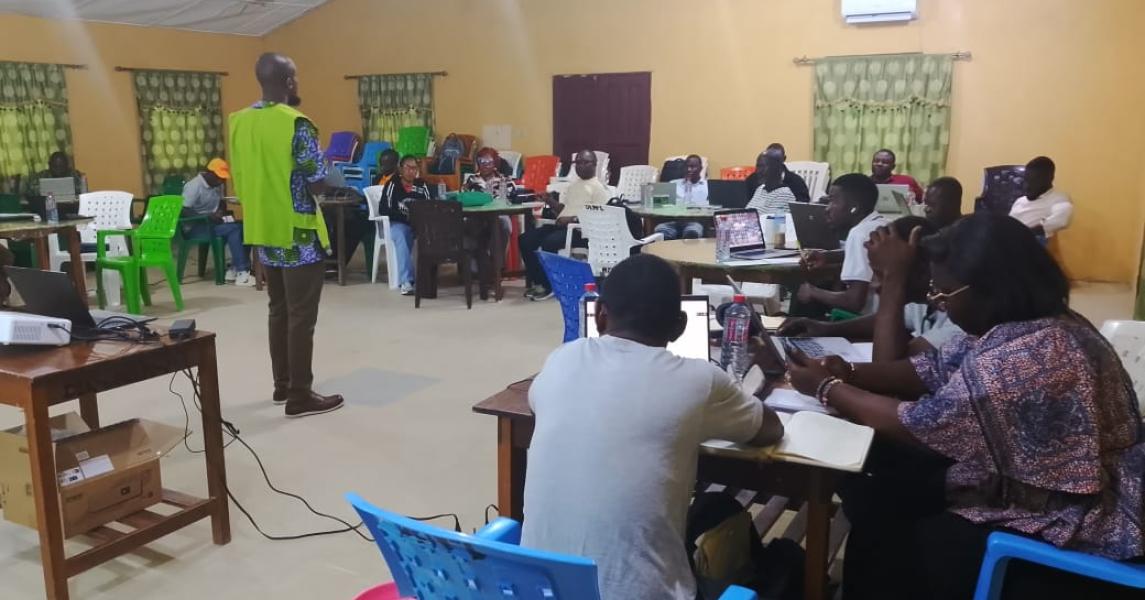
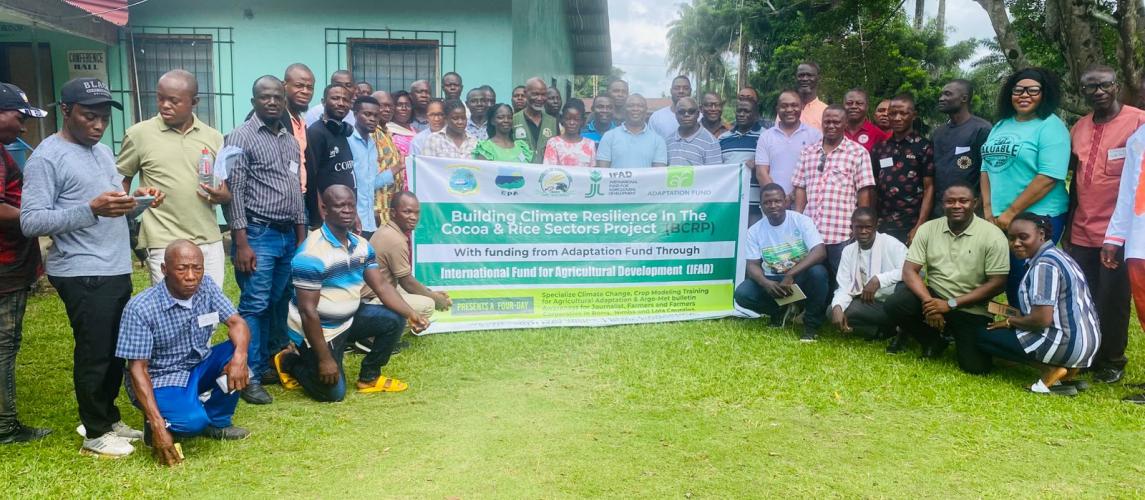
GBARNGA, Bong County – A four-day workshop held at DEN-L has marked a significant milestone in Liberia’s efforts to strengthen climate resilience in agriculture. Convened under the Building Climate Resilience Project (BCRP) with support from the International Fund for Agricultural Development (IFAD), the Government of Liberia, and implemented by the Environmental Protection Agency (EPA), the Liberia Meteorological Service (MET), and the Central Agricultural Research Institute (CARI), the training brought together key agricultural stakeholders from across the country.
DEN-L, Development Education Network-Liberia, is a local non-governmental organization based in Gbarnga, Bong County.
Edward Perry, Director for Extension at the Ministry of Agriculture, represented Minister Dr. J. Alexander Nuetah at the opening session. He welcomed participants and underscored the importance of the Agro-Meteorological Bulletin, which provides real-time rainfall data to guide farmers during planting seasons. Perry urged County Agriculture Coordinators (CACs), District Agriculture Officers (DAOs), extension officers, and technicians to carry this knowledge back to their communities, ensuring that farmers who could not attend the workshop still benefit from the initiative.
Calvin Tinatua Kollie, Climate Specialist at the EPA and focal person for the BCRP, emphasized the need to make weather data practical and accessible for farmers. He highlighted that the success of climate resilience depends on bridging the gap between scientific data and grassroots decision-making.
Robert Taylor, CAC for Bong County, reinforced the importance of rainfall data and crop modeling techniques in empowering farmers to adapt to climate variability. Meanwhile, Z. Elijah Whapoe of the EPA described the workshop as both technical and transformative, urging participants to take the training seriously so that weather data can be translated into actionable guidance for farmers.
The training module covered climate change and localized impacts, crop modeling for agricultural adaptation, agro-met bulletin production, and 10-day forecasts. Participants included county and district agriculture officers, extension officers, environmental inspectors, agricultural technicians, and lead farmers, recognized as vital conduits between national institutions and farming communities.
The exercise strengthened farmers' capacity to adapt planting schedules using scientific forecasts, enhanced national resilience against floods, droughts, and shifting rainfall patterns, and improved institutional collaboration for agro-meteorological services with a wider dissemination of agro-met bulletins across farming communities.
The workshop concluded with a strong recommendation for CARI management to prioritize support for agrometeorological data and weather stations. As Liberia’s sole agricultural research institution, CARI was urged to dedicate resources to ensure farmers receive timely advisory services that enhance resilience, improve yields, and safeguard livelihoods.
This initiative represents a unified commitment by IFAD, EPA, MET, CARI, and local stakeholders to secure Liberia’s food future. By equipping a new generation of agricultural leaders with tools such as crop modeling and agro-met bulletins, the program ensures that farmers are better prepared to adapt, thrive, and contribute to national food security in the face of climate change.