
Harvesting Evidence, Securing Futures: CARI–KAFACI Rice Trials Generate Critical Data for Sustainable Pest Management and Food Security in Liberia
CINTA TOWNSHIP, Margibi County – From the rice fields of Margibi, Bong, and Nimba Counties to national agricultural policy and farmer livelihoods, the CARI–KAFACI Pest Surveillance Initiative is transforming scientific research into practical solutions that strengthen food security, enhance climate resilience, and empower farming communities across Liberia.
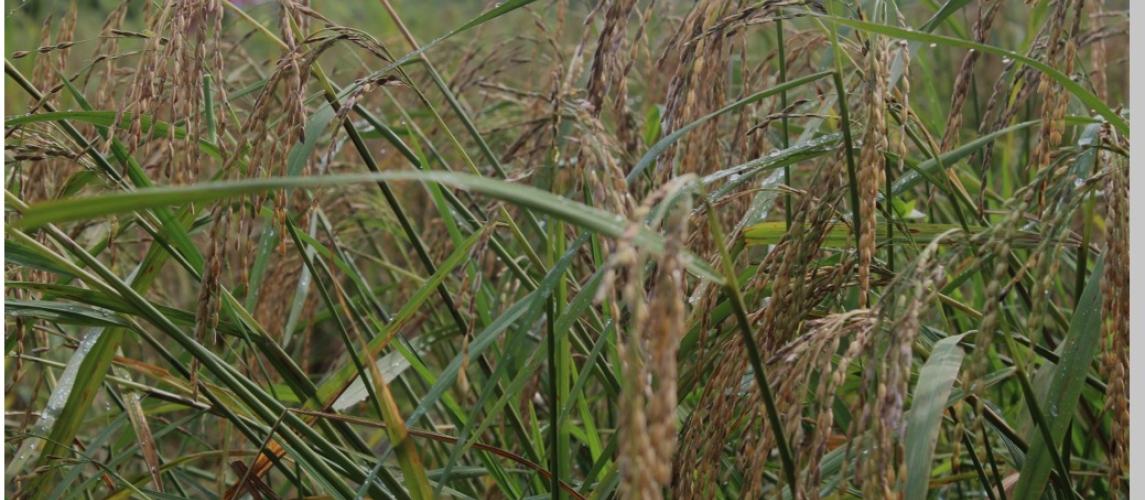
The Pest and Disease Surveillance Component of the Korea-Africa Food and Agriculture Cooperation Initiative (KAFACI) Project at the Central Agricultural Research Institute (CARI) has reached a significant milestone with the harvesting of multi-location rice demonstration plots in Cinta Township, Kpayah Town, along the Slocum Mission Road in Upper Margibi County. The harvest forms part of a broader effort to collect field data for scientific analysis and evaluation, contributing to the development of sustainable pest management strategies for Liberia's farming communities.
The demonstration plots are part of an extensive pest surveillance and research initiative designed to generate evidence-based solutions to crop production challenges. Information gathered from these trials will support researchers in assessing pest and disease incidence, crop performance, and the effectiveness of locally developed organic pest control options under varying environmental conditions.
For local farmers, the initiative represents more than a research activity. It offers a pathway to improved productivity, stronger resilience, and future agricultural transformation.
"We are encouraged by the level of engagement from the extension officers and the CARI team," said Daniel T.N. Dolo, Chairperson of the Kukatonon Farmers' Cooperative in Kpayah Town. "We believe the findings from this research will help improve rice production in our community. We are eager to learn the results and how they can benefit our farming practices."
Mr. Dolo also underscored the aspirations of the cooperative's 25 members, comprising 15 women and 10 men, who hope to gain access to essential mechanization services and equipment, including tricycles, power tillers, and a rice mill to improve post-harvest processing and productivity.
Similarly, Sam K. Diggs, Town Chief of Kpayah, commended CARI and KAFACI for bringing the initiative to the community and called for continued support to help strengthen local agricultural development efforts.
The harvest follows the launch of a comprehensive pest surveillance survey jointly implemented by CARI and KAFACI across five counties: Nimba, Bong, Margibi, Grand Cape Mount, and Lofa. The initiative represents a strategic investment in strengthening Liberia's food security systems while safeguarding the livelihoods of smallholder farmers who form the backbone of the country's agricultural sector.
Across the five counties, districts were randomly selected, and five farming communities within each district were surveyed. The selected communities cultivate essential food crops, including rice, cassava, vegetables, and other staples that contribute significantly to household nutrition and national food supplies.
The survey is being led by Research Officers and Research Assistants from CARI's Natural Resource Management and Socioeconomics Departments, with technical support from other research programs and units across the Institute. Their work seeks to identify, document, and understand pest and disease threats affecting crop production, thereby generating the scientific evidence required for effective intervention strategies.
Building on insights generated from the surveillance exercise, CARI and KAFACI have established field trials in Nimba, Margibi, and Bong Counties focusing on rice and maize production. The trials are evaluating the effectiveness of organic pesticide formulations developed from locally available materials to combat Fall Armyworm, a destructive pest that continues to threaten agricultural productivity and food security across the region.
By combining local knowledge with scientific innovation, the project is demonstrating practical, affordable, and environmentally sustainable alternatives that can help farmers reduce crop losses while minimizing dependence on imported chemical pesticides.
Beyond its research objectives, the CARI-KAFACI Pest Surveillance Initiative serves as a strategic platform for advancing Liberia's agricultural transformation.
Through systematic monitoring and assessment, the project strengthens early detection and rapid response mechanisms, enabling farmers and agricultural authorities to identify emerging pest threats before they cause significant crop damage.
The initiative also provides credible, science-based evidence to support policy formulation and decision-making. The data generated will inform national pest management strategies, guide resource allocation, and support efforts to strengthen agricultural resilience and food system security.
Furthermore, by integrating pest surveillance with field-based validation of organic control measures, the project enhances the adaptive capacity of farming systems, helping communities respond more effectively to climate-related risks and biological threats.
The initiative also reinforces transparency, accountability, and measurable impact, providing development partners and stakeholders with confidence that investments in agricultural research and innovation are yielding tangible benefits for food security, rural livelihoods, and sustainable development.
As harvest activities continue across project sites, the data collected will help shape future recommendations for pest management and crop protection. The initiative underscores CARI's commitment to evidence-based agricultural innovation and KAFACI's dedication to fostering collaborative solutions for Liberia's food security challenges.
The initiative (KAFACI) at CARI is implemented through three major components aimed at strengthening agricultural productivity, food security, and research capacity in Liberia. The first component focuses on rice variety evaluation and seed multiplication, where introduced rice varieties are tested for adaptation, disease resistance, yield performance, and suitability to Liberia's agroecological conditions. Selected high-performing varieties are multiplied to support future distribution to farmers and enhance national rice production.
The second component is pest monitoring and surveillance, which seeks to generate reliable data on crop pests and diseases across key agricultural regions of the country. Through field surveys and scientific data collection, researchers can easily identify emerging threats to crop production and develop informed strategies to improve agricultural resilience and safeguard food security.
The third component focuses on capacity building and agricultural technology transfer. Through collaboration with KAFACI and other international partners, CARI is strengthening the skills of researchers, technicians, and extension personnel while promoting the exchange of modern agricultural technologies and research methodologies. This component contributes to building a stronger national agricultural research system capable of addressing the challenges facing Liberia's agricultural sector.
Together, these three components support Liberia's efforts to increase agricultural productivity, strengthen food security, and promote sustainable agricultural development through science, innovation, and regional cooperation. With this initiative, Liberia's farming communities are cultivating more than demonstration fields; they are harvesting knowledge, building resilience, and laying the foundation for a more productive, sustainable, and food-secure future.
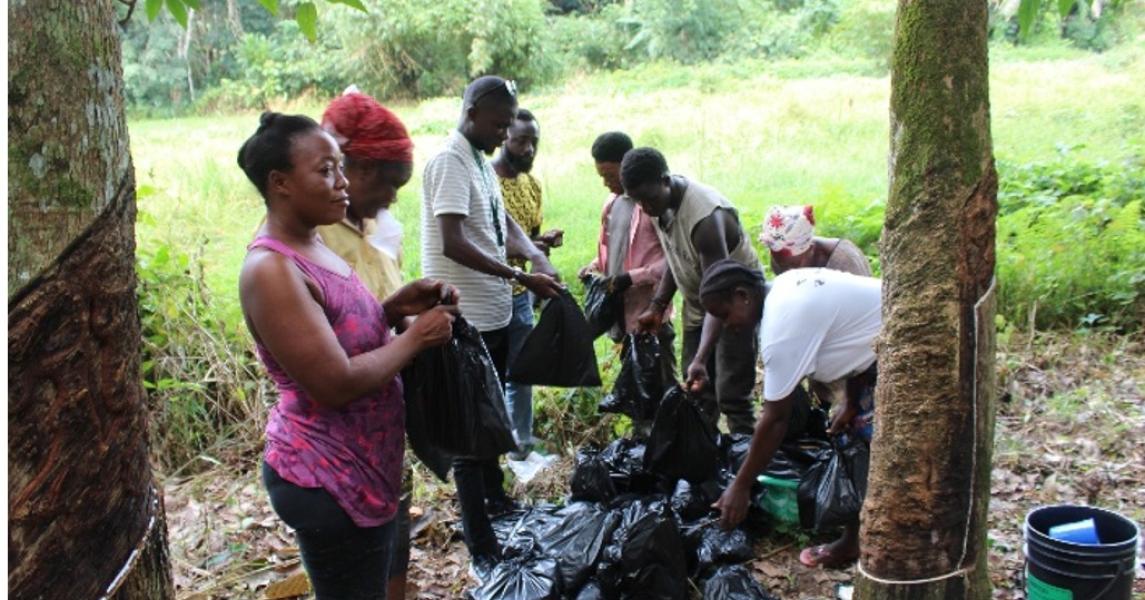
Field workers and technicians package harvested rice for post-harvest processing and storage, ensuring proper handling, preservation of grain quality, and preparation for further evaluation and seed multiplication activities.
Field workers and technicians package harvested rice for post-harvest processing and storage, ensuring proper handling, preservation of grain quality, and preparation for further evaluation and seed multiplication activities.
